The café was the kind of place where everything felt controlled—soft jazz in the background, quiet conversations, the faint clink of porcelain cups. People came here to think, to work, to be left alone.
Arthur Hale preferred it that way.
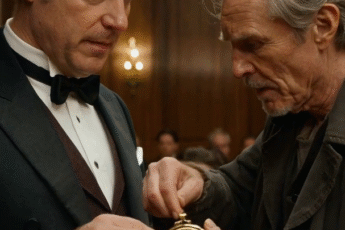
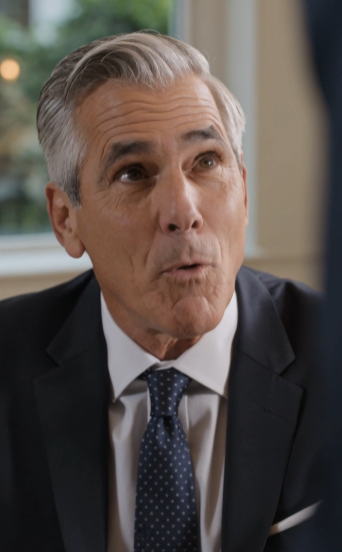
At seventy-two, he had learned to appreciate silence. He sat by the window, stirring his coffee slowly, watching the city move outside like a distant film. No one paid him much attention. Just another old man with time to spare.
Until the door slammed open.
The sound cut through the calm like a blade.
Five men walked in—loud, confident, carrying the kind of presence that didn’t ask for space, it took it. Leather jackets, heavy boots, careless smiles. Conversations around the café dimmed instantly.
Arthur didn’t look up.
Not until they stopped at his table.
“Hey, old man,” one of them said, pulling out a chair without asking. “You’re sitting in our spot.”
Arthur lifted his eyes slowly. Calm. Unbothered.
“I’ve been here for an hour,” he replied.
Another man chuckled, leaning on the table. “Then you had an hour to leave.”
A few people nearby glanced over, then quickly looked away. No one wanted trouble.
Arthur studied them for a moment—not with fear, but with something quieter. Something like recognition.
“You really want to do this?” he asked softly.
The leader smirked and leaned closer, his voice dropping.
“Who’s gonna stop us?”
For a brief second, the café felt completely still.
Arthur reached into his coat pocket and took out his phone. His movements were slow, deliberate. No hesitation.
He pressed a single button and brought it to his ear.
“Yeah,” he said calmly. “They’re here.”
The men laughed.
One of them shook his head. “What is this? You calling your grandson?”
Arthur didn’t answer.
He simply ended the call and placed the phone on the table.
Then he looked at them.
And waited.
Ten seconds passed.
Then fifteen.
The leader’s smirk started to fade.
From outside, the low hum of engines grew louder. Not one. Several.
The café windows reflected flashing lights—dark vehicles pulling up fast, precise, controlled.
The door opened again.
But this time… no one spoke.
Men in suits stepped in first. Not aggressive—disciplined. Focused.
Behind them came someone else.
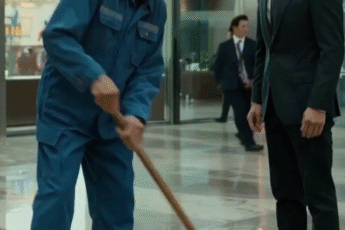
A man in his forties. Sharp suit. Calm authority. The kind of presence that didn’t need to raise its voice.
The leader of the group froze.
“Boss…?” he muttered under his breath.
The man ignored him completely.
He walked straight to Arthur.
And then—something no one in that café expected—
He stopped.
And bowed his head slightly.
“Sir,” he said quietly. “I came as fast as I could.”
The room went silent.
Arthur looked at him, almost amused.
“You’re late,” he replied.
The man allowed himself a faint smile. “Traffic.”
Arthur nodded, then gestured lightly toward the group behind him.
“They were just leaving.”
The leader’s face had gone pale. The confidence, the arrogance—it was all gone now, replaced with something raw and desperate.
“Sir, we didn’t know—” he started.
Arthur raised a hand gently.
“I know,” he said. “That’s the problem.”
The men were escorted out without another word.
No shouting. No violence.
Just quiet, absolute control.
The café slowly came back to life, though nothing felt quite the same.
The man in the suit remained standing beside Arthur.
“Should I have them dealt with?” he asked quietly.
Arthur picked up his coffee again, taking a small sip.
“No,” he said. “They’ve already learned enough for today.”
The man nodded.
Arthur looked back out the window, watching the city again.
After a moment, he spoke—almost to himself.
“People think power is loud,” he said. “It rarely is.”
The man beside him didn’t respond.
He didn’t need to.
Because everyone in that room had just seen the truth for themselves.