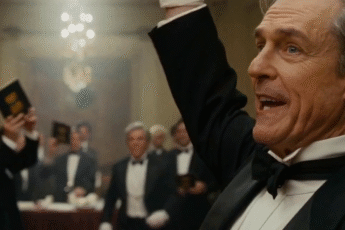
On the night of April 15, 1912, the Atlantic Ocean was black, frozen, and merciless.
The Titanic, the ship people had called unsinkable, was dying.
Its lights still glowed across the water like a floating city, but inside, that city had become a nightmare. Passengers ran through narrow corridors. Mothers held their children. Men shouted for lifeboats. Crew members tried to keep order, but fear was moving faster than any command.
And then, through the panic, people heard music.
At first, some thought it was impossible.
Who would play music while a ship was sinking?
But there they were — the musicians of the Titanic, standing together as the deck tilted beneath their feet. Their hands were cold. Their faces were pale. Around them, people were crying, praying, and fighting for a place in the lifeboats.
Still, the band played.
A frightened passenger stopped near them, staring in disbelief.
“Why are you still playing?” he asked. “The ship is going down.”
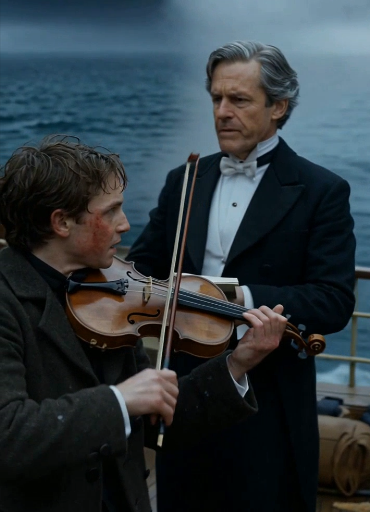
The band leader looked at him. For a moment, he said nothing. Behind him, the ocean was climbing higher. The screams were growing louder. The lifeboats were drifting away into the darkness.
Then he answered quietly.
“Because fear should not be the last sound they hear.”
The passenger froze.
Nearby, a little girl who had been sobbing into her mother’s coat slowly lifted her head. An old woman stopped trembling for just a second. A young man, who knew he would not get into a lifeboat, closed his eyes and listened.
The music did not stop the disaster.
It did not save the ship.
But for a few final moments, it gave people something human in the middle of horror.
The musicians could have tried to escape. They could have pushed through the crowd. They could have searched for a lifeboat like everyone else. But they stayed together. One by one, they followed the rhythm, even as the deck became steeper and the cold wind cut through their coats.
Some passengers later remembered the sound of that music more clearly than the screams.
As the Titanic sank lower into the ocean, the band leader looked at his fellow musicians. They all understood. No one needed to say it. There would be no rescue for them.
The water was close now.
The ship groaned beneath them like a wounded beast.
The band leader lifted his violin once more.
His hands were shaking, but not from fear alone. He looked at the men beside him — men who had chosen dignity over survival, courage over panic, and music over silence.
Then he said softly:
“Gentlemen… one more song.”
And as the Titanic disappeared into the freezing Atlantic, the music faded with it.
None of the musicians survived.
But more than a century later, their story still lives — not because they were rich, powerful, or famous, but because in the final minutes of one of history’s greatest tragedies, they gave frightened people a last moment of peace.