The cheap hotel room where we were hiding now smelled of dampness and weak coffee. The words of Marcos — the man I knew as a beggar — still hung in the air, heavy like the silence that followed.
“What do you mean he’s afraid of what I might see?” I asked, my fingers clenched on the edge of the Formica table, as if it were the only real thing in a world falling apart.
Marcos sighed. His voice no longer carried any trace of the street; it was calm, calculated, educated.
“Your blindness, Elisa. It wasn’t an accident at birth.”
He told me everything. In his youth, my father hadn’t been the respectable businessman he appeared to be. He had been a ruthless smuggler. Our family fortune hadn’t come from clean business, but from lies and alliances with dangerous people. My mother, a woman of rare kindness, had discovered the truth. She found documents — evidence that could have sent him to prison for life.
“She threatened to leave him and take the evidence to the police,” Marcos explained gravely. “On the night she confronted him, they argued terribly. Blinded by rage, he pushed her. Your mother fell onto the dining table. She was pregnant with you.”
The blow, he told me, hadn’t caused her to miscarry, as I had always been told. Instead, I suffered a brain injury in the womb — in the occipital lobe, the part of the brain that processes vision. My father, overwhelmed by guilt and panic, used money to hide the truth, falsifying the real medical report into one that stated “irreversible congenital blindness.” This way, his crime remained buried beneath the grave of my disability.
“And you? Who are you really?” I asked, as tears burned down my cheeks, though I could not see them.
“My name is Marcos Arocha. I am an investigative journalist. Your mother was my aunt — my father’s sister. For years, I have been searching for the truth about her ‘accident.’ Your father found out I was getting close. He knew that if I managed to reach you, you would be the key. Your very existence contradicted his story.”
His plan had been diabolical. By marrying me to a “beggar” — an identity Marcos had adopted in order to investigate in secret — my father achieved two things: he removed me from the family, where I might find traces of the truth, and he discredited me completely. Who would believe a blind woman, married to a homeless man, claiming to be the heiress of a fortune and the victim of a conspiracy?
“This key,” Marcos said, placing it once more in my hand, “opens a safe deposit box in a bank in Zürich. Inside are all the documents your mother hid: the original medical reports, financial papers, recordings. Your father hired me to ‘take you away and make sure you never came back.’ What he didn’t know was that I agreed only in order to get close to you and tell you the truth.”
The revelation was an earthquake. My entire life, my entire identity, had been built on a criminal lie. My father didn’t hate me because I was blind; he hated me because my existence was proof of his guilt. And the possibility — however small — that I might ever regain my sight was his greatest nightmare: the sign of a truth that could come to light at any moment.
The next day, with Marcos’s help, I contacted international authorities. The safe deposit box was opened. The evidence was overwhelming.
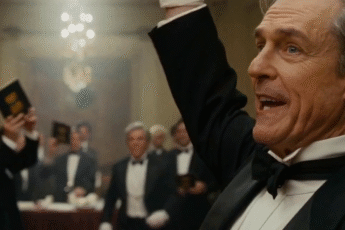
The last time I saw my father was in the courtroom. His cold, calculated gaze met mine — empty and blind, but for the first time filled with absolute certainty. I said nothing. There was no need. He saw on my face that I knew everything. The “useless” girl he despised and condemned to darkness was, in the end, the one who brought him into his own.
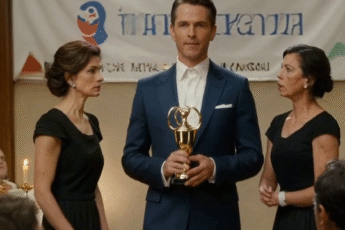
Today, Marcos and I run a foundation for children with visual disabilities. My father’s fortune, largely confiscated, now funds our work. Sometimes, in the stillness of night, I think about the irony of fate: my father condemned me to a life of shadows to hide his crime, yet there, in the darkness, I found the light of truth — and in the man he chose to dispose of me, I found not an executioner, but the only one who restored my story, my identity, and, ultimately, my peace.