On the night of September 26, 1983, the world was closer to ending than almost anyone knew.
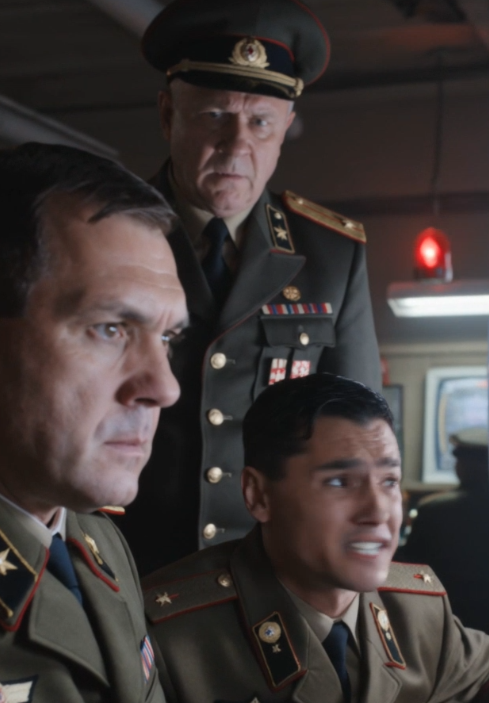
Deep inside a secret Soviet command bunker, Lieutenant Colonel Stanislav Petrov sat in front of a wall of glowing screens. Around him, the room was cold, narrow, and filled with the constant sound of machines. Officers moved quietly between metal desks. Radios whispered. Old computers blinked in green and red.
It was supposed to be an ordinary night shift.
But nothing about that night felt ordinary.
The Cold War had made the entire world nervous. The United States and the Soviet Union watched each other like enemies standing with loaded guns in a dark room. One mistake, one wrong signal, one frightened decision could start a war that no one would survive.
Petrov knew that better than anyone.
His job was not to fight. His job was to watch.
If the Soviet satellite system detected American nuclear missiles, Petrov had to report it immediately to his commanders. After that, the decision would move higher and higher, until the fate of millions rested in the hands of men who had only minutes to respond.
Then, shortly after midnight, the alarm screamed.
A red light flashed across the bunker.
One of the young operators jumped from his chair.
“Sir… the system says American missiles are coming.”
For a second, no one moved.
Then the room exploded into panic.
Phones rang. Men shouted. Chairs scraped against the floor. On the screen, the system reported that a missile had launched from the United States.
Then another.
Then another.
Five missiles.
The young operator’s hands trembled over the controls.
“Confirmed by the system, sir.”
A senior officer stepped closer to Petrov. His face was pale, but his voice was hard.
“Call Moscow. Now. That’s an order.”
Petrov stared at the screen.
The machine was telling him that the United States had started a nuclear attack.
His training told him what to do.
His duty told him what to do.
The room told him what to do.
But something inside him refused.
He looked again at the number.
Five missiles.
Only five.
That made no sense.
If America wanted to destroy the Soviet Union, they would not send only five missiles. A real first strike would be massive. Hundreds of missiles. Maybe thousands. The sky would be full of fire.
But the system did not care about logic.
The alarm kept screaming.
The senior officer leaned closer.
“Colonel, report the launch.”
Petrov’s hand moved toward the black military phone.
Everyone watched him.
That phone was not just a phone. It was a door. Once he picked it up and gave the warning, the world might never come back from it.
He imagined what would happen next.
Moscow would receive his report. Soviet leaders would have only minutes to decide. They would not have time to investigate calmly. They would not have time to wait. If they believed the warning, they might order a counterattack before the American missiles arrived.
And if that happened, the United States would respond.
Then Europe.
Then the world.
Cities would burn before sunrise.
Mothers would never wake their children for school. Fathers would never return home. Entire families, entire streets, entire countries could vanish because one man trusted a machine too quickly.
Petrov took a slow breath.
The young operator whispered, “Sir… if you’re wrong, millions die.”
Petrov did not answer immediately.
He kept staring at the screen, searching for certainty in a room built for fear.
But certainty did not come.
Only instinct.
Only doubt.
Only the terrible silence beneath the alarm.
Finally, he pulled his hand away from the phone.
“No,” he said.
The senior officer froze.
“What did you say?”
Petrov turned toward him.
“No. America wouldn’t start a war with only five missiles.”
The senior officer’s eyes widened.
“The system confirmed it.”
“Machines can be wrong.”
“And if you are wrong?”
Petrov looked at the faces around him. Young men. Tired men. Frightened men. Men who wanted someone else to make the decision.
Then he looked back at the screen.
“Then pray I’m right,” he said quietly. “It’s a false alarm.”
No one spoke.
The room became a prison of seconds.
Every man waited for the proof that would either save Petrov or destroy him.
One minute passed.
No impact.
Two minutes.
Still nothing.
Three minutes.
The red light continued to flash, but outside the bunker, the world remained silent.
No explosions. No reports. No nuclear fire over Soviet cities.
The young operator slowly looked up from his console.
“Sir… no radar confirmation.”
Another officer checked his screen.
“No additional launches.”
Petrov closed his eyes for a moment.
He had been right.
The warning was false.
Later, they discovered what had happened. The Soviet satellite system had mistaken sunlight reflecting off clouds for missile launches. The most terrifying warning in the world had been caused not by an enemy attack, but by light.
Just light.
Petrov did not celebrate.
He did not smile.
He simply sat down again, as if his legs had forgotten how to hold him.
By morning, the world continued as usual. People opened shops. Children went to school. Cars filled the streets. Couples argued over coffee. No one knew that, hours earlier, their lives had balanced on the silence of one man in a bunker.
For years, most people never heard his name.
Stanislav Petrov did not become rich. He did not become a national hero with statues in every city. In fact, his decision was uncomfortable for the system, because it proved the system had almost failed.
But history has a strange way of finding the quietest heroes.
Years later, when the truth became known, people called him the man who saved the world.
Petrov never liked that title.
He said he was only doing his job.
But that was not true.
Many people can follow orders.
Very few can disobey fear.
And on a night when every alarm demanded action, Stanislav Petrov saved humanity by doing the most difficult thing of all.
He waited.
And because he waited, the morning came.