When the relief boat finally reached Eilean Mòr, the sea was still angry.
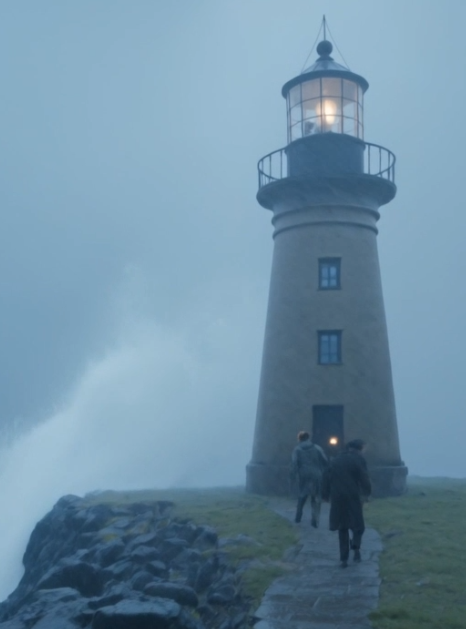
The storm had passed, but it had not truly left. It lingered in the black water that struck the rocks below the cliffs, in the cold wind that seemed to whistle through the island like a warning, and in the faces of the two men climbing the wet path toward the lighthouse.
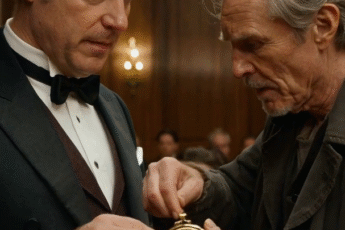
Thomas Reid, the senior rescuer, had spent most of his life at sea. He was not an easy man to frighten. Beside him climbed young Daniel Kerr, new to the service, holding a lantern so tightly his knuckles had gone white.
Above them, the lighthouse stood silent.
No beam cut through the morning fog. No movement appeared in the windows. No one had come out to greet them.
Daniel looked up at the tower and swallowed. “The light’s out… that’s not possible.”
Thomas said nothing at first. He had already seen too much that morning. The flagpole by the station was bare. The supply crate near the path had been overturned and left open. And most troubling of all, no signal had come from the tower, though the relief boat had sounded its horn again and again.
When they reached the heavy wooden door, Thomas tried the handle. Locked.
He pounded once. Twice. No answer.
“Stay close,” he murmured. “Something’s wrong.”
Together they forced the door open.
The hinges groaned.
The air inside was stale, carrying the faint scent of lamp oil, damp wood, and food that had long gone cold.
Daniel lifted the lantern higher. The kitchen stood just ahead. The small table was set for three men. A loaf of bread had been cut and left open. A pot of stew sat untouched. One chair was pushed back as if someone had just risen from it. Along the wall, two heavy oilskins still hung on their hooks.
Daniel stared. “Dinner’s still here…”
Thomas stepped closer, his boots echoing softly across the floorboards. “And their coats too…”
No men. No voices. No sound but the wind outside and the hard beating of Daniel’s heart.
The younger man glanced toward the stairwell that spiraled upward into darkness. “Then where are the keepers?”
Thomas followed his gaze.
The black mouth of the staircase seemed to wait for them.
His voice dropped almost to a whisper. “If no one left… who’s upstairs?”
They climbed.
The lower rooms were empty. The bunks had been slept in. One blanket lay half-folded. A watch rested on a bedside crate, stopped at 8:47. A Bible sat open on a narrow shelf. In the lamp room at the top, the great lens stood cold and dark. Everything was in order. No broken glass. No sign of struggle. No blood. No bodies.
Only absence.
By noon, the captain of the relief boat and two more men had joined the search. They combed the cliffs and the paths, checked the rope storage, the landing steps, the machinery room, every cupboard and corner. Below the western rocks they found damage—an iron rail bent sideways, a supply box smashed open, and rope scattered across the stones as if torn loose by a monstrous wave.
It was enough for Captain Macrae to form an explanation.
“They went out in the storm to secure the gear,” he said grimly. “A sea that fierce could’ve taken all three.”
Thomas looked back toward the tower. “All three? At once?”
Macrae’s face tightened. “It happens.”
But Thomas was not convinced.
Lighthouse keepers knew the sea better than almost any man alive. And they knew the rules. One man might go out. Two in an emergency. But all three? Leaving the light unattended?
No. Something about it sat wrong in his bones.
That afternoon, while the others continued the search outside, Thomas returned to the keepers’ quarters alone.
He stood again in the small kitchen, studying the table, the chairs, the hanging coats. One detail struck him more clearly now than before: there were only two oilskins on the wall.
There should have been three.
He turned slowly.
One man had gone outside prepared for the storm.
Two had not.
Thomas moved to the bunkroom again, more carefully this time. He checked the drawers beneath the narrow beds, the shelves, the chests. In the chest under the bed nearest the window, beneath neatly folded shirts and a wool scarf, he found a small wooden box.
Inside were letters tied with blue ribbon.
Most were old and personal, addressed to Ewan MacLeod, the youngest of the three keepers. Thomas hesitated, then unfolded the top letter. He read only enough to understand what it was.
A woman’s hand. Warm, careful, loving.
I still do not know if the sea made you or stole you from me, one line said. But when you return, I will be waiting with our little Anna in my arms, and she will know your face the moment she sees it.
Thomas lowered the letter.
Anna.
He looked through the rest of the box and found more from the same woman—Mairead. A wife on the mainland. A small daughter Ewan had barely seen. A family waiting for him.
Under the letters was a leather journal.
Thomas opened it.
At first it contained ordinary things—wind directions, maintenance notes, passing ships, weather observations. Then the entries grew stranger.
December 12
Angus says the sea has a different voice before death. Callum laughed at him, though not for long. Wind changed by dusk. Waves striking west rocks harder than I have ever seen. I thought I heard singing after midnight, but there was only the storm.
December 13
No ships passed. Bad weather. Callum restless. Angus silent all evening. I received Mairead’s letter and read it three times. Anna is beginning to walk. I dreamt last night of light burning under the water.
Thomas frowned and turned the page.
The final entry was hurried, the ink darker in some places where the pen had paused too long.
December 15
Storm worsening. The sea impossible. At supper, Angus heard a cry from below the west landing. At first we thought it was wind through the rocks. Then we heard it again. Not wind. A child. God help us, it is a child.
The writing broke off there.
Thomas stared at the page.
A child?
He read it again, slower.
Then he began tearing through the rest of the chest, searching for more. He found nothing.
By evening, the official report was nearly settled. Three men lost to the sea during storm damage. Tragic, but explainable.
Thomas said nothing of the journal yet.
He needed to be sure.
After sunset, the others remained in the lower quarters, warming themselves and waiting for better weather to leave at dawn. But Thomas could not rest. The last entry gnawed at him. He took a lantern and went out alone toward the western side of the island.
The cliff path was treacherous, slick with spray and moss. Below, the sea smashed itself to white fury against the rocks. He climbed down farther than he should have, bracing himself against the wind, lantern shaking in his hand.
Then he saw it.
Wedged between two black stones above the tide line was the shattered remnant of a small rowboat.
Most of it had been smashed to splinters. But tangled in the wreckage was a scrap of pale fabric—perhaps once part of a child’s shawl.
Nearby, caught around a nail in the rock, was a length of rope. Not washed there by accident. Tied. Deliberately.
Thomas crouched and examined the area more closely. There were marks on the stone—dragging marks—leading away from the edge and toward a narrow crevice in the cliffside, half-hidden in shadow.
He lifted the lantern and stepped inside.
At first he thought the cave was empty.
Then he heard breathing.
Soft. Uneven. Human.
Thomas’s heart slammed in his chest. He moved deeper, ducking under a low shelf of stone.
There, huddled beneath a pile of old sailcloth, was a boy.
He could not have been more than six years old.
His hair was fair with salt, his face pale and hollow, his lips cracked with thirst. He flinched at the light and tried weakly to crawl backward, but he had nowhere to go.
Thomas dropped to his knees.
“Easy,” he said quickly. “Easy, lad. I’m not here to harm you.”
The boy stared with enormous frightened eyes.
Thomas removed his coat and wrapped it around him. “How long have you been here?”
The child tried to answer, but only a small rasp came out.
Thomas saw at once that the cave held evidence of care. A tin cup. Bits of bread, now hard. A blanket from the lighthouse. Someone had sheltered the boy here.
And then he saw the object lying near the child’s hand.
A brass lighthouse key.
The kind carried only by the keepers.
Thomas’s breath caught.
He gathered the boy gently into his arms and climbed back through the wind and dark toward the tower.
When he entered, the others jumped to their feet.
“Sweet Lord,” Captain Macrae whispered. “Where did you find him?”
“In a sea cave below the west rocks,” Thomas said. “Alive. Hidden.”
Daniel rushed to fetch water and blankets. The child drank greedily, then coughed. His voice, when it came, was little more than a whisper.
Thomas knelt beside him. “What is your name?”
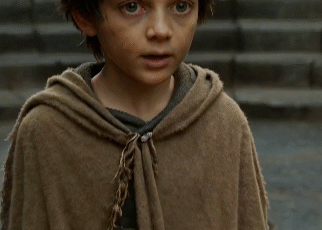
The boy blinked slowly. “Finn.”
“How did you come here, Finn?”
The child’s eyes filled with tears.
“Our boat broke,” he said. “Mama said to hold her hand, but the waves…” His mouth trembled. “The men from the light found me.”
The room fell silent.
Captain Macrae stepped forward. “How many men?”
“Three,” Finn said softly.
Thomas looked at him carefully. “What happened to them?”
The boy stared into the lantern flame as if seeing something far away. “They heard me crying. One came first with a rope. Then the others. They pulled me from the rocks.” He swallowed. “I told them my mama was in the water.”
No one moved.
Finn continued in the detached voice children sometimes use when speaking of things too large for them to understand. “The oldest man said they’d find her. The young one gave me his scarf. Another one put bread in my pocket and told me not to be afraid.”
Thomas felt the weight of the journal in his coat pocket.
“They brought me to the cave because the wind was bad,” Finn whispered. “They said I had to stay hidden and warm. The younger one said when the storm calmed, he’d take me home.”
“And then?” Thomas asked.
Finn looked up.
“They went back to the sea.”
No one spoke for a long moment.
Outside, the storm had begun again, softly this time, like a long exhausted sigh around the tower.
Captain Macrae sat down heavily. Daniel covered his mouth.
Thomas understood it now.
Not accident. Not recklessness. Not madness.
They had heard a child in the storm.
They had saved him.
And then, because there might still have been a mother alive in the water below, because some men are simply unable to turn away from another human being’s last cry, they had gone back.
All three of them.
Knowing the sea. Knowing the danger. Knowing, perhaps, what it might cost.
For the next two days, the weather trapped them on the island. During that time Finn slowly regained his strength. He remembered only fragments. A small boat. His mother singing to keep him calm. A great wave in the dark. Strange men with lanterns and kind hands.
There was no sign of his mother.
When the sea finally allowed them to return to the mainland, Thomas brought Finn with them.
The official report was still written cautiously. It could not declare what no one had directly seen. But Thomas ensured that a private account reached the proper people, including the families of the missing men.
Weeks later, he made a journey to a small coastal village where Ewan MacLeod’s wife lived.
Mairead opened the door holding a child on her hip. Little Anna had Ewan’s eyes.
Thomas removed his hat.
He had faced storms, shipwrecks, and death notices before, but nothing had prepared him for the pain in Mairead’s face when she understood why he had come.
She listened in silence as he told her everything he knew.
When he finished, tears slid down her cheeks, but her back remained straight. She looked down at Anna, then back at Thomas.
“So he did not die in fear,” she said quietly.
“No,” Thomas answered. “I don’t believe he did.”
She closed her eyes.
“He always said the light was not there to command the sea,” she murmured. “Only to help strangers find their way home.”
Thomas reached into his coat and handed her the letters he had found, along with the journal.
Mairead held them to her chest.
Then she did something Thomas never forgot.
She smiled through tears.
Not the smile of a woman untouched by grief. The smile of a woman whose heart had broken and yet had found something to hold in the ruins.
“He kept his promise,” she whispered.
Thomas frowned gently. “What promise?”
She looked at Anna.
“He told me once that if ever the sea asked him to choose between coming home to us and saving a life, he prayed I would forgive him for choosing the life.”
Spring came.
Then summer.
The story of the vanished keepers spread across harbors and villages, told and retold until mystery wrapped itself around the truth. Some preferred the mystery. It was darker, more dramatic, easier to remember.
Three men vanished. No one knew why.
But Thomas knew.
And Finn knew.
The boy had no family left that anyone could find, so arrangements were made for him to stay at a church home near the coast. Thomas visited when he could. At first Finn spoke little. He would sit by the window and stare toward the sea, clutching the old scarf Ewan had wrapped around him in the cave.
Yet children, mercifully, are made of stubborn hope.
By autumn, he had begun to laugh again.
Years passed.
Thomas grew older. His hair whitened. His hands stiffened. But he never forgot the island, or the dark tower, or the table set for three men who had risen from supper because somewhere below them, in the violence of the storm, a child had cried out.
On a cool evening nearly twenty years later, Thomas—retired by then—stood once more on the mainland shore watching a lamp being lit in a small new lighthouse built nearer the harbor.
Beside him stood a young man in keeper’s uniform.
Finn.
No longer the frightened child from the cave, but broad-shouldered, steady-eyed, and quiet in the way of men who have known sorrow young and grown around it rather than out of it.
He held a polished brass key in one hand.
Thomas recognized it instantly.
“The old key,” he said.
Finn nodded. “I kept it all these years.”
The sun had nearly set, staining the horizon gold.
Thomas glanced at him. “You never had to take this work, you know.”
Finn smiled faintly. “Maybe not.” He looked toward the sea. “But all my life I’ve wondered what kind of men walk into a storm for someone they do not know.”
Thomas did not answer.
Finn’s voice softened. “I think the only way to thank them is to become the kind of man who would do the same.”
The first beam turned slowly across the water.
For a long moment, neither man spoke.
Then Finn reached into his coat and drew out a folded letter, worn at the edges.
“Mairead gave me this before she died,” he said. “She told me to open it on the day I lit my first lamp.”
He unfolded it carefully. The handwriting was delicate, familiar.
Thomas recognized it at once.
Mairead’s.
Finn read silently at first, and then his eyes filled. After a moment, he handed it to Thomas.
It said:
Dear Finn,
If you are reading this, then enough years have passed for grief to become something quieter. I wanted you to know that I never saw you as the boy who survived while my husband did not. I saw you as the life he carried out of the storm.
Do not waste your years asking why you were spared. My Ewan would not want that. Live kindly. Love deeply. And whenever you stand in the dark holding a light for strangers, know that a part of him is standing there too.
You were not the end of his story, dear boy.
You were its meaning.
Thomas lowered the letter slowly.
The sea ahead of them caught the turning light and scattered it into trembling silver.
Finn wiped his eyes, but he was smiling.
In that moment, Thomas understood something he had not fully seen even all those years ago on the island.
The mystery people loved was never the true heart of the story.
The true heart was this:
Three men had heard a cry in the dark and chosen compassion over safety.
The sea had taken them.
But it had not defeated them.
Because one frightened child had lived.
Because that child had grown into a man who now lit the way for others.
Because love, once given bravely, does not vanish. It travels. It reaches shore after shore, life after life, like light across black water.
As the evening deepened, Finn climbed the steps into the new tower and set the lamp to its full burn.
Far out at sea, a distant vessel answered with a single horn.
Thomas lifted his face toward the sound and imagined, just for a second, three figures standing in a doorway above a storm-lit cliff—wet from the spray, weary from the struggle, but unafraid.
Then the vision was gone, and only the beam remained, sweeping steadily over the darkening world.
And somewhere in its passing glow, the lost men of the old lighthouse finally came home.